All products featured are independently chosen by us. However, SoundGuys may receive a commission on orders placed through its retail links. See our ethics statement.
Wired headphones are making a comeback: Here's why
Mar 30, 2026 — 12:21 PM ET


Wireless headphones and earbuds reign as the golden standard for most listeners. While that’s still true, wired headphones are reentering the spotlight, and the numbers back it up. After five straight years of declining sales, wired headphone purchases exploded in the second half of 2025, with revenue up 20% in the first six weeks of 2026. Today, we answer why wired headphones are on the rise, capturing the ears of younger listeners, and cross our fingers that they’re here to stay. Who knows, if enough of us return to wired earbuds and headphones, maybe we’ll even see the return of the headphone jack.
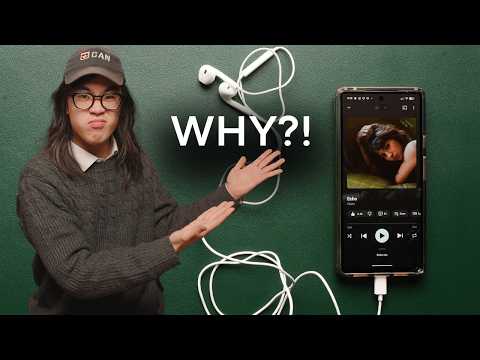
Fashion trends and the nostalgia factor

As someone who sits on the cusp of millennial and Gen Z, I’ve noticed younger peers prefer wired headphones and earbuds. Younger generations are flocking to things that remind them of simpler times. We’ve seen this with the rise of film photography and digital editing styles that look like film. We’ve seen it with modern flip phones and vinyl record players. And, of course, we’re seeing it with the resurgence of wired headphone usage.
Y2K nostalgia is nothing new to the consumer audio market — look at the Beats Studio Buds Plus and Nothing’s line of earbuds. But now, younger generations are forgoing wireless tech altogether for wired alternatives. High-profile celebrities, including Kamala Harris, Bella Hadid, Lily-Rose Depp, Ariana Grande, and Charli XCX, have all been spotted sporting wired earbuds publicly, and there’s even a popular Instagram account called Wired It Girls dedicated to the aesthetic. Wired headphones have become a full-blown fashion statement, not just a practical choice.
On the surface, you could point the finger at TikTok, where wired earbuds have quietly become the default accessory for creators. While that plays a role, it seems a shallow read on listeners’ motivations.
Wired headphones are more affordable
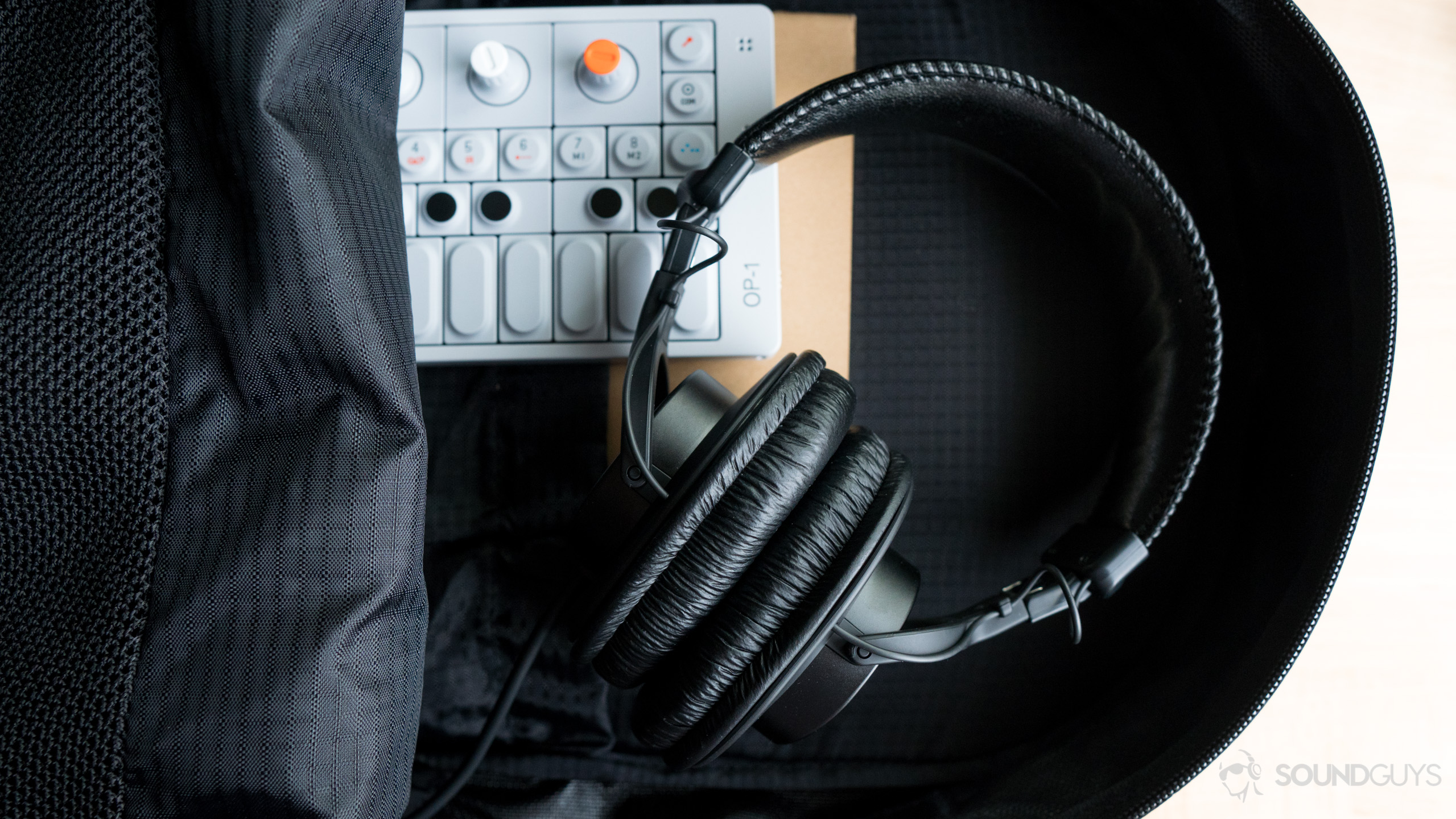
Wired headphones likely aren’t trending for fashion’s sake alone. According to Moody’s Analytics analysis of Bureau of Labor Statistics data, inflation is hitting US-based Gen Z and millennial folks harder than other age groups. Sure, we all love nostalgia, but walking down memory lane is even sweeter when it’s easier on the wallet.
When necessities like rent and insurance gobble up a majority of your income, it’s hard to justify springing for $400 headphones. Tech minimalism isn’t just an aesthetic anymore — for a lot of younger listeners, it’s a survival strategy. The planned obsolescence baked into wireless headphones, designed to nudge you into buying every couple of years again, is increasingly falling flat. A $20 pair of wired earbuds that lasts a decade is starting to look a lot smarter than a $200 pair of wireless buds with batteries that will inevitably fade.
For a fraction of the cost, you can buy the stalwart Audio-Technica ATH-M50x, or classic Sony MDR-7506 for even less. Sad bonus: you can even use either set of cans for a side gig in audio production to help make ends meet.
You're far more likely to find great-sounding wired headphones for under $100 than wireless ones.
When you consider wired earbuds, things become even more affordable. Apple’s EarPods cost $19 at Amazon, and they plug straight into your USB-C device. The TANGZU Wan’er S.G., are the best value earbuds around at $24.99 at Amazon.
Wired headphones are easier to use than wireless headphones

I’ve talked to family and peers through pairing their earbuds to their various devices far more times than I care to count. With wired headphones, it’s a plug-and-play listening experience. Most of us can understand how to plug headphones into a headphone jack. The days of top-tier smartphones with headphone jacks are long gone, but the experience is almost the same with a USB-C adapter.
Likewise, you don’t have to worry about connectivity issues with wired earbuds — at least not in the same way. Connection stability has vastly improved since the early days of true wireless earbuds, but nothing beats an analog connection. Wear sensors on some earbuds can cause frustrating dropouts. Batteries die at the most inopportune moment. With a wire, you just plug in and you’re ready until you unplug them.
Don’t worry. You’ll still experience some disconnections when your cable catches on every doorknob and handle nearby. That’s just part of the authentic wired audio experience.
Wired earbuds and headphones are better for the environment

With wired headphones, you never charge the batteries because they don’t use batteries. Unlike wireless headphones, your phone powers wired ones. This means that fewer precious metals are mined from the Earth, and zero lithium-ion batteries end up in landfills when it comes time to retire your wired headphones. In turn, fewer chemicals will leach into the environment, contaminating soil and groundwater.
Eco-friendliness aside, you're far more likely to lose one or both wireless earbuds than a set of wired earbuds.
It gets even better. Wired earbuds and headphones generally outlast their wireless counterparts — sometimes by a wide margin. Wireless headphones tend to reach the end of their life around two to three years in, while wired headphones can last upwards of a decade. This ties back to the lack of batteries: every charge cycle degrades battery cells, and since it’s almost impossible to replace batteries in wireless earbuds, most Bluetooth audio products end up in the trash. With wired headphones, the cable is the usual failure point, and many headphones have replaceable cables. Instead of tossing the whole thing, you swap the cable and keep listening.
Oh, let’s not forget that wired earbuds tend to outlast wireless ones because it’s far easier to pocket a single earbud, forget about it, and toss your pants in the wash. Please, ask me how I know this.
Wired headphones support reliable lossless audio

We’ve already covered many reasons why people avoid wireless headphones. Another: Bluetooth headphones and earbuds still don’t support lossless audio. Some products support the LHDC lossless Bluetooth codec, but there are other factors to consider. Your earbuds and source device must support LHDC, and the actual music files must be very high-quality. It’s far easier to ensure lossless audio by listening with a compatible streaming service and plugging your headphones into your device.
Also, with wired earbuds and headphones, you won’t run into any audio-visual lag. It’s one of my biggest pet peeves when I watch a video only to find a person’s mouth is out of sync with their words. You’ll never run into this with wired headphones. This is even worse if you’re a gamer. In that case, nab a wired gaming headset instead of Bluetooth headphones.
Are wired headphones better than wireless headphones?

Wired headphones can be better than wireless headphones, especially for dedicated tasks like audio mixing or gaming. As we say time and time again here, what constitutes “good” depends on your unique needs and priorities. If you want the best value for sound and build quality, wired earbuds and headphones are for you. If, however, you need the bells and whistles of active noise canceling (ANC) and personalized spatial audio, save up for the best wireless headphones.
When it comes to on-ear headphones for daily listening, the Koss PortaPro ($59 at Amazon) are a perennial favorite around here. My wired headphones of choice are the Sennheiser HD 650 ($399 at Amazon).
Undoubtedly, there are plenty of excellent wired headphones to choose from. Before we depart, I’ll leave you with this: Contrary to what some outlets may have you thinking, wired headphones are not making a comeback because Bluetooth headphones emit harmful radiation. Wireless headphones are completely safe, and Bluetooth is not dangerous.
Why do you use wired headphones and earbuds over wireless ones?
Frequently asked questions about wired headphones
You may lose a nominal amount of data when converting from a digital signal to an analog one, but most of us won’t be able to perceive that data loss.
As with anything, whenever there is a culture, there is a counterculture. Some people may use wired earbuds and headphones to go against the grain, but that’s likely a minority of listeners.
Thank you for being part of our community. Read our Comment Policy before posting.