

DB
“While they are expensive, the build quality is exceptional.”
- Better than expected: Comfort over long sessions
- Better than expected: Fit and build after months
Did this help you decide?Be the first to say
All products featured are independently chosen by us. However, SoundGuys may receive a commission on orders placed through its retail links. See our ethics statement.
Jan 23, 2026 — 9:49 AM ET
There are lots of reasons to consider buying studio headphones. While the term studio headphones gets tossed around incorrectly a lot (looking at you, Beats), it generally refers to headphones that are intended for use in a recording studio, or professional audio environment. If you are recording music, you’ll want a good set of closed-back studio headphones that can monitor the recording without leaking into the microphone. There are also open back studio headphones, which are ideal for mixing music. Either way, you’ll want headphones that sound accurate, with a relatively neutral frequency response.
We’ve tested hundreds of headphones in our SoundGuys lab, and have narrowed down the top studio headphones worth considering. Ultimately, you should buy the studio headphones that are best suited to your audio needs and preferences, but these options are a good place to start. You can also check out our recommendations for the best open back headphones, the best budget studio headphones, and the best headphones for music.
For a quick guide to the best studio headphones that suit your needs and budget, check out our top picks below. Each has a link to our full review.
Already own something?
Anything we have measured, not just the picks. It becomes a second curve on every chart here. Sign-in needed to publish.
Comparing needs no sign-up
Below you’ll find our in-depth coverage of each of the best studio headphones. Each model has been rigorously tested, ensuring you can trust our recommendations.

The Sennheiser HD 490 PRO stands out as an exceptional choice for audio professionals and bedroom music producers alike, offering versatility, durability, and excellent sound quality, especially for those in pursuit of open-back headphones. Designed with music production in mind, these headphones feature swappable ear pads, allowing users to tailor sound and comfort according to their preferences. Despite the challenge of swapping the ear pads due to their non-magnetic attachment mechanism, I find both the velour and fabric options offer substantial comfort for extended listening sessions. The HD 490 PRO also includes a unique offering, the free dearVR MIX-SE plugin, enhancing the mixing experience by simulating various listening environments within digital audio workstations.

Weighing just 260g, the HD 490 PRO’s design prioritizes comfort for long studio sessions, and I have no trouble wearing these for hours on end. Our testing shows that the velour ear pads result in a frequency response with more bass, whereas the fabric ear pads are ideal for picking out details in upper frequencies. No matter which ear pads you use, the Sennheiser HD 490 PRO sound great, with excellent clarity on vocals and instruments.
Read our full Sennheiser HD 490 PRO review

The Senneheiser HD 600 have been in producer’s desks for decades now, just like how the Sony MDR-V7506 has been in almost every TV news van or radio station. This is because the headphones offered what was — at the time — one of the “flattest” sounds you could find. Essentially, headphones that sounded close-ish to flat speakers in a semi-reflective room. This allowed people to handle broad tasks without relying only on speakers, though final mastering requires it.

Though the HD 600 has stood the test of time, there are several other iterations of the headphones, so there’s no shortage of alternatives if this series of cans tickles your fancy. For example, you can usually find a less expensive variant through Drop, the HD 6XX, on sale for much less money at the cost of lower-cost build materials. There are also other headphones meant for casual listeners, like the HD 660S2. But if you want a set of headphones that have served many producers well for a long time, the HD 600 is one of the first headphones you should look at.
Read our full Sennheiser HD 600 review
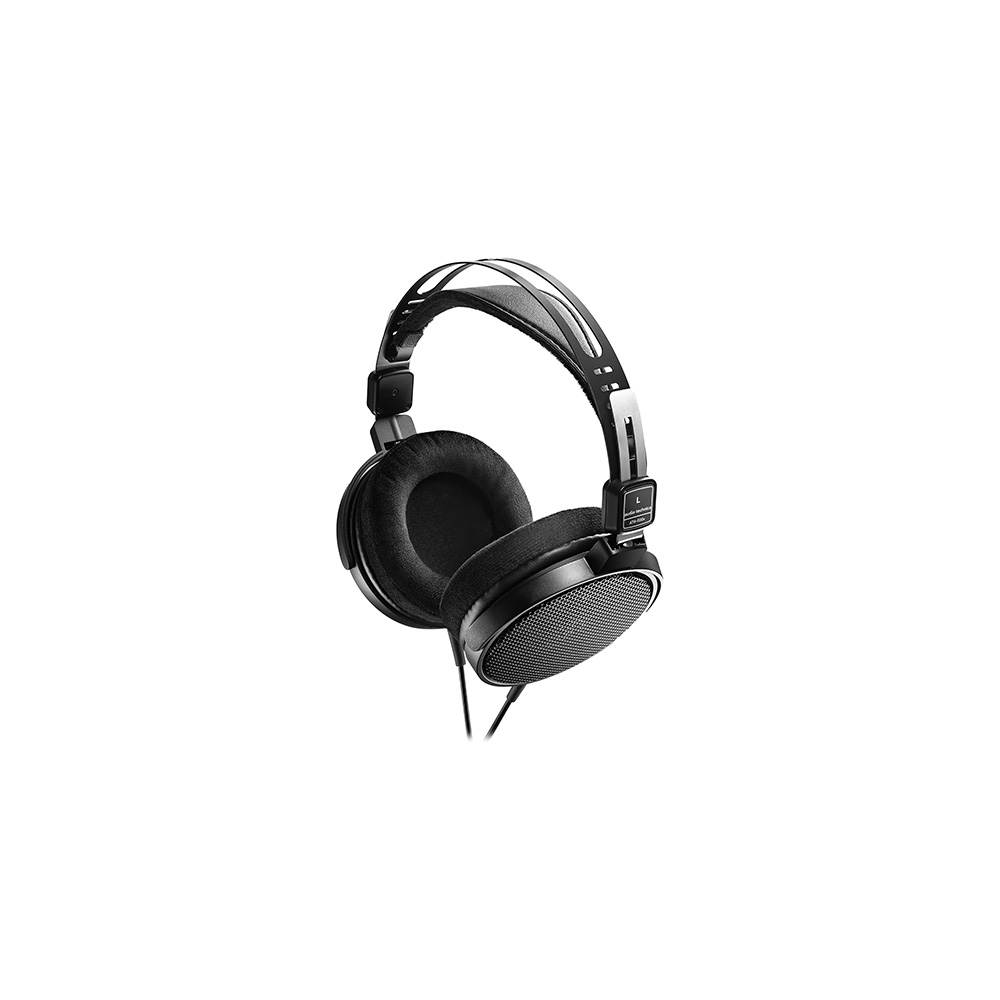
The Audio Technica ATH-R30x are a great option for those looking for budget studio headphones. The R30x are open-back headphones, so they are ideal for bedroom music producers or those who edit and mix audio in quiet environments. At this price, if you are buying the R30X, these are probably your first open-back studio headphones. If you are used to consumer headphones, which tend to have a V-shaped frequency response with amplified bass and treble, the R30x offer a similar sound for a smoother transition to studio sound quality. Even though the sound is not what most experienced professionals look for, a lot of people will prefer this sound, as it is more in line with what they are used to from their consumer gear. So as a first set of studio cans, the R30x are a great option.
That said, there are some tradeoffs with the sound quality here, as is to be expected with headphones that are this affordable. That consumer sound profile means that these are by no means a reference-grade headphone. While these headphones are totally fine for video creators, gamers, and new music producers, they are not great for serious audio mixing and mastering work. For that, you should invest in something a bit higher grade. You could consider the more expensive R50X and R70X from the same Audio-Technica R-series. For more money, those headphones provide a flatter frequency response that is preferred for professional audio work.
Loading chart ...

If you’re in the market for audio nirvana and have the budget to match, look no further than the Sennheiser HD 800 S. These headphones are an audiophile’s dream, meant for those who desire an “endgame” experience without future upgrades. Don’t let their understated appearance fool you. Forgoing gold leaf and leather, they focus on what matters most: exceptional sound quality and unparalleled comfort. The unique, hemisphere-shaped ear cups maximize space around your ears, allowing for an impressively natural sound reproduction. Paired with a lightweight build and velour ear pads, comfort is guaranteed, even during marathon listening sessions.

But the real magic lies in their performance. Offering a soundscape that provides an uncanny illusion of spatial depth, the HD 800 S is a cut above the rest. Thanks to deep ear cups and angled drivers, they excel in recreating the intricacies of various genres—from the crispness of orchestral pieces to the adrenaline of action movies. The bass is a tad subdued, which might not be to everyone’s taste, but this is by design. Besides, the bass and other sound elements are easily adjustable via equalization without any noticeable distortion, even at higher levels.
So, is this headset worth its hefty price tag? Absolutely, but with a caveat: it is for a very specific audience. If you’re looking to invest in a dedicated indoor listening station where cost is secondary to quality, these headphones will feel like a revelation. The Sennheiser HD 800 S delivers a top-tier performance with only minor footnotes, making it a shoo-in as a top pick for studio headphones.
Read our full Sennheiser HD 800 S review

The AKG K371 is a great pick for recording artists, DJ’s, and any musicians who travel frequently. Despite the over-ear design, this package is slim and portable: the ear cups flip up and into the headband, similar to Audio-Technica’s design. What’s more, the K371 is good for DJs as you can rotate either ear cup backward and up to keep one ear on the crowd.

The frequency response was tailored using Harman’s consumer preference research, which can help create content that translates well to other systems. AKG supplies you with three cables, two straight and one coiled, so no matter your environment, you’ll have something that works for you.
Despite the plastic build, the headphones are durable and withstood multiple trips at the bottom of a backpack during my full review. Don’t drop an unabridged encyclopedia onto this headset, but the build can withstand some roughhousing. What’s more, these headphones are great for listeners with glasses because the slow-retention memory foam wraps around the glasses’ arms.
Read our full AKG K371 review

From owners1 owner review · 1 of 1 would buy again
All 1 →DB
“While they are expensive, the build quality is exceptional.”
Now that spatial audio has achieved much wider adoption, preserving the illusion of 3D space is more important than ever. Because it’s very difficult to do this without a set of reference speakers, those of you who like to use headphones to mix might want to look at the Sony MDR-MV1.

The headphones are a set of open-back, wired cans with a somewhat odd response. However, Sony created these to tackle the needs of content creators looking to mix tracks for spatial audio, so its features are more appropriate through that lens. Very comfortable and durable, these headphones should acquit themselves well over the years, as the cables are replaceable, as well as the ear pads.
Read our full Sony MDR-MV1 review
If you want good quality headphones and have money to spend but don’t want studio headphones, you should probably get something else. Though studio headphones offer very good sound quality, these headphones are most often more expensive to get and offer far fewer features than consumer headphones. It’s very probable that if you’re not an audiophile or music creator, you don’t want studio headphones.

For example, studio headphones are pretty terrible for commuters: a situation where you’d want active noise canceling headphones instead for their superior noise isolation and bassier sound (that can more easily be heard over engine noise). Additionally, studio headphones aren’t generally meant for gaming consoles — making them a poor pick for that purpose.
Studio headphones shine by the computer and in the mixing booth. They’re most often tools designed for a specific purpose, but depending on the situation, they can also be utilized for your own enjoyment.
Studio headphones aren’t for everyone, as many of us prefer a bit of bass amplification for daily listening. What many people consider to be good sound isn’t what everyone else considers to be good sound. But when you’re getting paid to do a job, accuracy takes priority over a consumer-friendly experience. While we could go on about all of the reasons why you should want some studio headphones, we’ll keep it simple with a few quick points.
While consumer headsets don’t typically require an external amp, studio headphones often will need them. Fortunately, plenty of easy-to-use USB interfaces are available to streamline your production process.
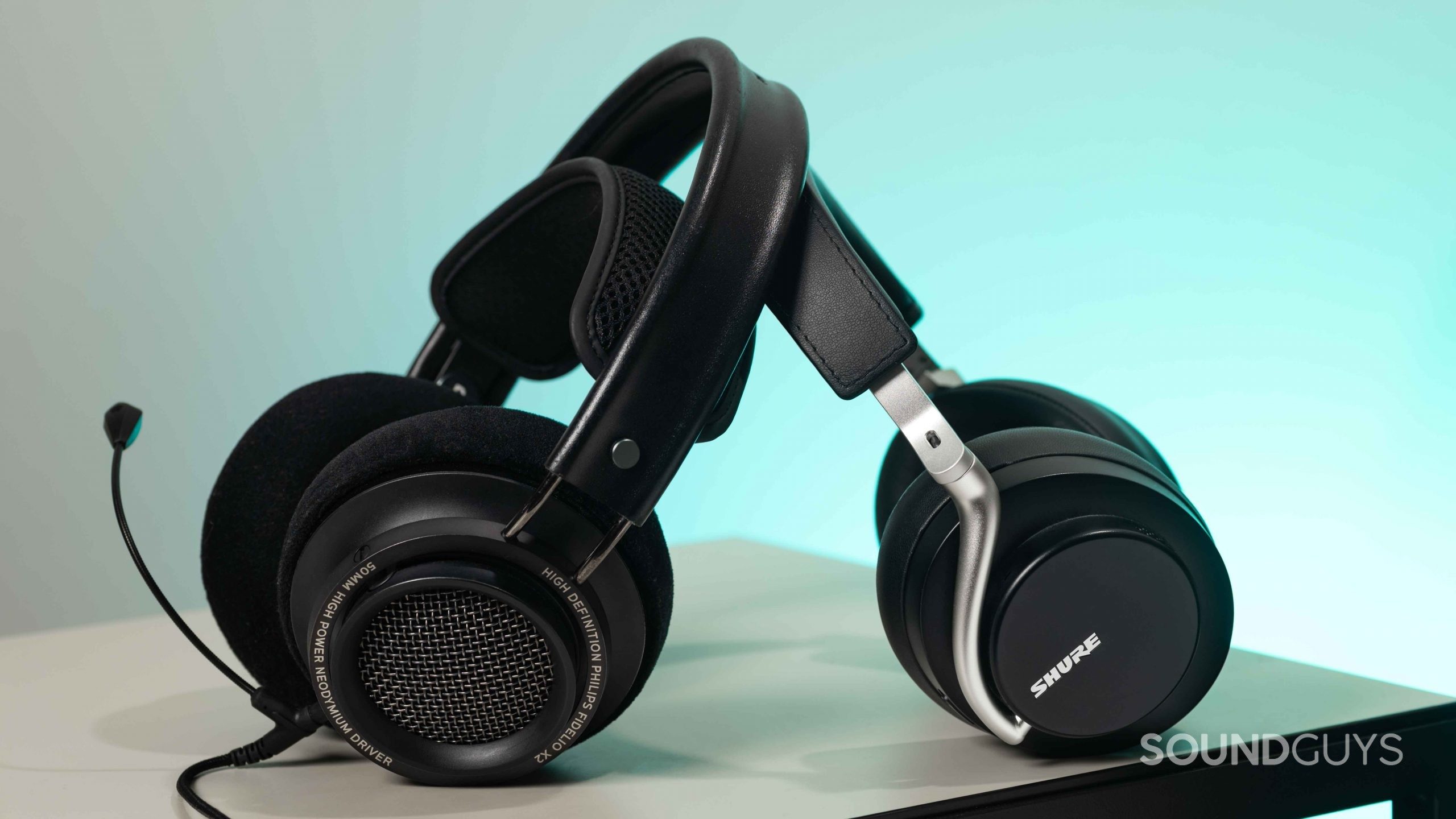
Open-back and closed-back headphones refer to whether the back of the headphone driver is open to the environment or enclosed. While closed-back headphones are better for isolating the listener from their surroundings, open-back cans are typically better for studio applications: they create a better representation of three-dimensional sound. Studio headphones are typically closed-back, so the musicians can use them while recording without risk of sound feeding back into the microphones. Still, open-back headphones can be used for monitoring and mixing purposes.
Consider reading Lil’s educational piece on why you might not want studio headphones and perhaps consider some of the best over-ear headphones instead.
Working at SoundGuys allows each of us to have plenty of hands-on time with the latest and greatest audio products. While we do spend ample time testing out great products, we also receive some that need work. Regardless of how one pair of headphones stacks up against another, it gives us a different reference point for understanding what’s good and what’s not when it comes to consumer products.
Ultimately, we want to make the research process easier for you so you can spend more time enjoying your headphones.
Ideally, you will have both studio headphones and studio monitors. Studio headphones are necessary for recording and tracking, but studio monitors are much better for mixing. They create a more accurate soundstage than headphones can, making it easier and faster to create good mixes.
More vendors than just Amazon have quick and cheap shipping now, and plenty of small businesses sell your favorite products too. Where you choose to buy your headphones could depend on a lot of things, including your shopping ethics, how much customer support you want, and the warranty of the company. Check out our guide to get a rundown of some options and their stats.
For studio recording, musicians typically use closed-back headphones to prevent sound from feeding back into the microphones. However, for other studio applications like monitoring and mixing, open-back headphones are preferred due to their ability to create a better representation of three-dimensional sound.
Producers lean towards trusted classics and modern marvels alike. The Sony MDR-7506 has been a staple since the mid-1980s, while newer entrants like the Beyerdynamic DT 900 PRO X and the Sennheiser HD 600 have also found their place in professional studios.
In the studio realm, closed-back headphones are standard for recording sessions, ensuring sound doesn’t escape and interfere with recordings. Yet, when the scene shifts to mixing and monitoring, the open-back variants are often the top pick, offering a detailed and open sound profile.
Studio-grade headphones come with a range of price tags. For those on a budget, options like the Sony MDR-7506 start at around $99.99. On the higher end, headphones like the Sennheiser HD 820 can reach up to $2,399.95. But there’s a diverse range in between, catering to various needs and budgets.
Absolutely. Studio headphones are built for precision and flat frequency response, enabling accurate audio reproduction. They are designed for professionals who require nuance and detail in sound. In contrast, regular headphones often have a “colored” sound that boosts certain frequencies like bass, making them less accurate.
Generally speaking, studio headphones are not the go-to choice for DJs. DJs usually prefer headphones with enhanced bass and louder volume to cut through ambient noise, features typically absent in studio headphones. However, studio headphones can be useful in a studio setting for creating and mixing tracks.
Studio musicians usually hear a customized mix that helps them keep time and pitch. This mix often includes a metronome click, other instruments, and sometimes even a guide vocal. The goal is to provide them with all the necessary audio cues for a pitch-perfect performance.
Thank you for being part of our community. Read our Comment Policy before posting.