All products featured are independently chosen by us. However, SoundGuys may receive a commission on orders placed through its retail links. See our ethics statement.
The best-sounding earbuds in 2026: Objectively tested for your pleasure
Apr 11, 2026 — 7:00 AM ET


At SoundGuys, we are frequently asked: “What are the best-sounding earbuds?” Much to our dismay, many believe that pricing, branding, and marketing slogans, like “lossless,” are automatic indicators of superior sound quality. However, what really matters is personal preferences, ear shape, and listening environments. We have spent years refining our Headphone Preference Curve to provide an objective basis for listeners to compare headphone performance based on these metrics. Modelled using blind testing with our prized B&K 5128 test head and reference headphones from AKG, Apple, Audeze, and more, here are the best-sounding earbuds in 2026, according to our tests.
The Quick Answer
For a quick guide to the best-sounding earbuds that suit your needs and budget, check out our top picks below. Each has a link to our full review.
Already own one? See every pick measured against it.
We add yours to every chart on this page, and unlock the owner review you can leave for other buyers.
Nothing to sign up for
The best overall: Sony WF-1000XM6
Sound 4.8 /5ANC 8.8 /10Per charge 9.7 h
The best for iPhone: Apple AirPods Pro 2
Per charge 6 h
From owners5 owner reviews · 4 of 5 would buy again · owners report ~7 h per charge vs 6 h claimed
“The features that makes them great are locked out from android and windows. So they are just ok most of the time.”
Fit and comfort over hours betterNoise cancelling in the real world betterBattery in real life as expectedMic on calls worseBuds and case after months as expected
“Very comfortable and smooth with consistent performance. Used for office use and training.”
Fit and comfort over hours betterNoise cancelling in the real world as expectedBattery in real life as expectedMic on calls as expectedBuds and case after months as expected
“Work well and the conversation mode is great”
Fit and comfort over hours as expectedNoise cancelling in the real world as expectedBattery in real life as expectedMic on calls as expectedBuds and case after months as expected
The best for gaming: Sony INZONE Buds
Sound 4.8 /5ANC 8.1 /10Per charge 12 h
The best budget: EarFun Air Pro 4+
ANC 8.0 /10Per charge 8.7 h
From owners1 owner review · 1 of 1 would buy again
“I'm absolutely satisfied with the sound quality and the comfort.”
Fit and comfort over hours as expectedNoise cancelling in the real world worseBattery in real life as expectedMic on calls as expectedBuds and case after months as expected
The best IEMs: Kiwi Ears Septet
Sound 4.8 /5
The best for athletes: KEF Mu3
Per charge 9 h
Best-sounding earbuds overall: Sony WF-1000XM6

Loading chart ...
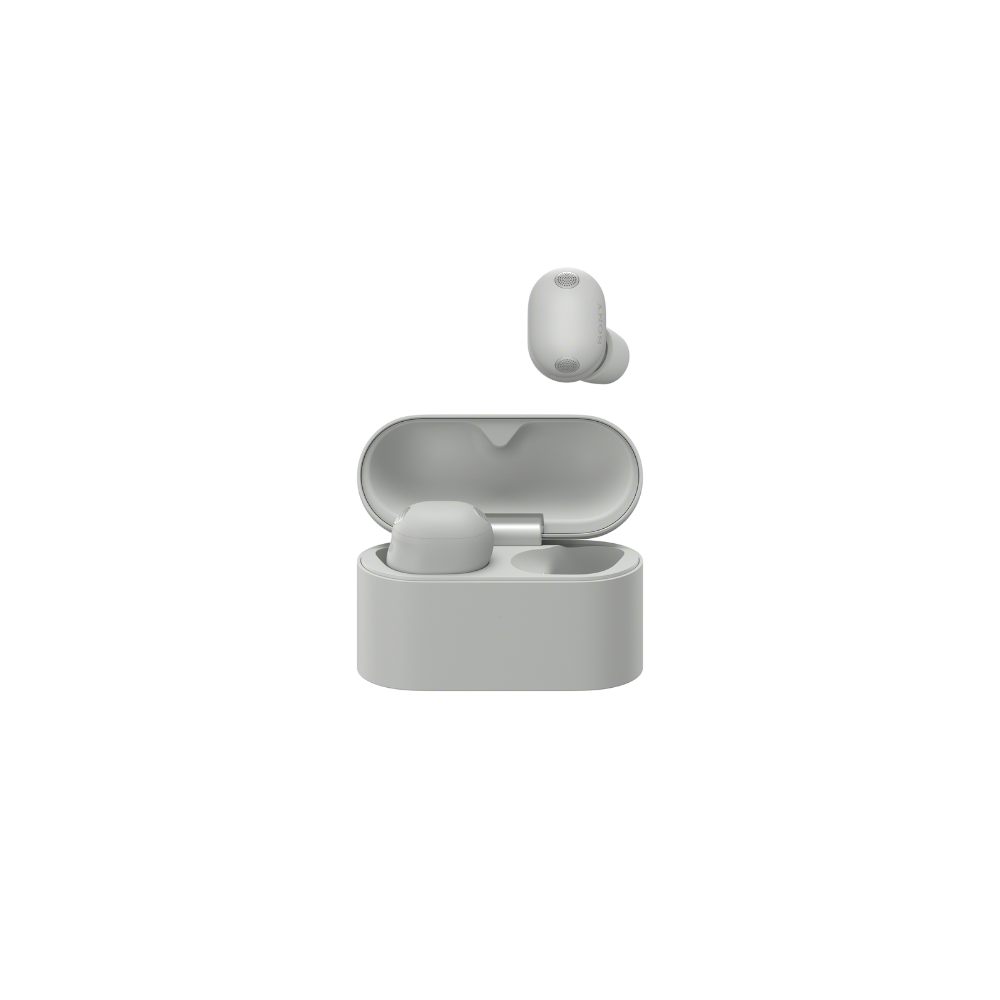
The XM6 are without a doubt Sony’s best-sounding earbuds to date. The upper-midrange remains well-represented with only minor deviations that shouldn’t affect vocals or guitars. Our MDAQS tests confirm this, with scores of 4.9 in Timbre, 3.5 in Distortion, 4.5 in Immersiveness, and 4.8 Overall. This indicates that most people will enjoy the earbuds’ sound, particularly due to Sony’s new driver system. In our testing, instruments sounded well separated, percussion and cymbals rarely sounded shrill, and bass instruments maintained detail without loss of bass precision.
- Read our full Sony WF-1000XM6 review
However, it’s worth noting that the Sony WF-1000XM6 sound subjectively best with ANC disabled. This is because, with it, the earbuds exhibit a louder bass response below 500Hz that can make bass guitars and kick drums sound over-represented in the mix. Of course, this can be beneficial during workouts or when listening in noisy environments, but it’s less ideal for critical listening. Regardless of ANC, there’s some over-emphasis around 6kHz, which, at higher volumes, could make cymbal shimmers and other high-frequency details sound grating.
Tuning the buds to your liking is straightforward using the Sony Sound Connect app. This unlocks a 10-band custom EQ with ±6dB of adjustment per band. There are also a handful of EQ presets for those who don’t want to tweak their sound. The app also lets you prioritize sound quality, which will automatically stream music over the LDAC codec. This provides 24-bit/96kHz audio sampling with compatible Android smartphones, preserving more of the original audio data. Otherwise, you receive SBC, AAC, and LC3 with LE Audio.
Sony WF-1000XM6 price history

Sound 4.8 /5ANC 8.8 /10Per charge 9.7 h
Best-sounding earbuds for iPhone: Apple AirPods Pro 2

Loading chart ...
Loading chart ...
Apple has a history of hitting the sound quality nail on the head. Both the Apple AirPods Pro 2 and AirPods Pro 3 are excellent-sounding earbuds that consistently top our charts as the best earbuds for iPhones. However, while Apple reworked the acoustic chamber on the Pro 3, improving bass response and stereo performance, the reality is harder to measure. That’s because, at lower volumes, the Pro 3 emphasize bass and treble frequencies far more than we’d like. The sound quality changes further depending on whether or not the wear-detect sensor is disabled. This is far less of a problem with the Apple AirPods Pro 2, hence why they earn our recommendation here.
- Read our full Apple AirPods Pro 2 review
The AirPods Pro 2 will make most music sound good, and they follow our target curve closely in the bass and midrange. The only significant deviations happen above 8kHz, where the buds underemphasize treble frequencies. However, while this leads to a darker overall tuning, most listeners won’t be too bothered by this during everyday listening. Indeed, the AirPods Pro 2 score 4.8 in Timbre, 4.7 in Distortion, 3.7 in Immersive, and 4.8 overall in our MDAQS tests. These are among the best scores we have recorded here at SoundGuys.
Just be mindful that the AirPods Pro 2 have the Adaptive EQ feature enabled at all times. This uses inward-facing microphones to monitor what you hear in real time and adjusts the low and mid frequencies accordingly, providing a more consistent sound quality in any environment. However, if this isn’t to your liking, you can choose from a menu of EQ presets in Apple Music. You’ll need a dedicated EQ app if you want a custom EQ, and the earbuds do not support any Hi-Res Bluetooth codecs.
Apple AirPods Pro 2 price history

Per charge 6 h
From owners5 owner reviews · 4 of 5 would buy again · owners report ~7 h per charge vs 6 h claimed
Best-sounding earbuds for gaming: Sony INZONE Buds

Loading chart ...
Loading chart ...
The Sony INZONE Buds are designed specifically for the PlayStation 5 and PC. Provided this is all you’ll use them for, they have some of the best default sound quality of any wireless gaming earbuds on the market. For example, while inferior to over-ear headphones, they enjoy decent spatial representation for casual gaming. This makes it easier to distinguish footsteps located behind you from overflying helicopters during play.
- Read our full Sony INZONE Buds review
When listening to music, the Sony INZONE Buds reproduce instruments with no perceivable distortion. Bass lines come through clearly, and kick drums don’t overpower the mix. This is demonstrated in our frequency response tests, where the earbuds exhibit underemphasized sub-bass below 70Hz. There’s also some underemphasis between 770Hz and 1470Hz, which can make some female voices sound less present. Still, the earbuds score 4.9 in Timbre, 3.3 in Distortion, 4.1 in Immersiveness, and 4.8 Overall in our MDAQS tests.
One caveat to bear in mind is that the Sony INZONE Hub app is only accessible via Windows. So, if you want to tweak the sound profile to your liking using the 10-band custom EQ, you’ll need to connect the buds to a nearby PC. However, doing so will also allow you to conduct Sound Field Personalization and Sound Tone Personalization, and to toggle EQ presets. Also note that the Sony INZONE Buds only support Bluetooth LE, meaning they’re not compatible with older Android smartphones.
Sony INZONE Buds price history

Sound 4.8 /5ANC 8.1 /10Per charge 12 h
Best-sounding budget earbuds: EarFun Air Pro 4+

Loading chart ...
Loading chart ...
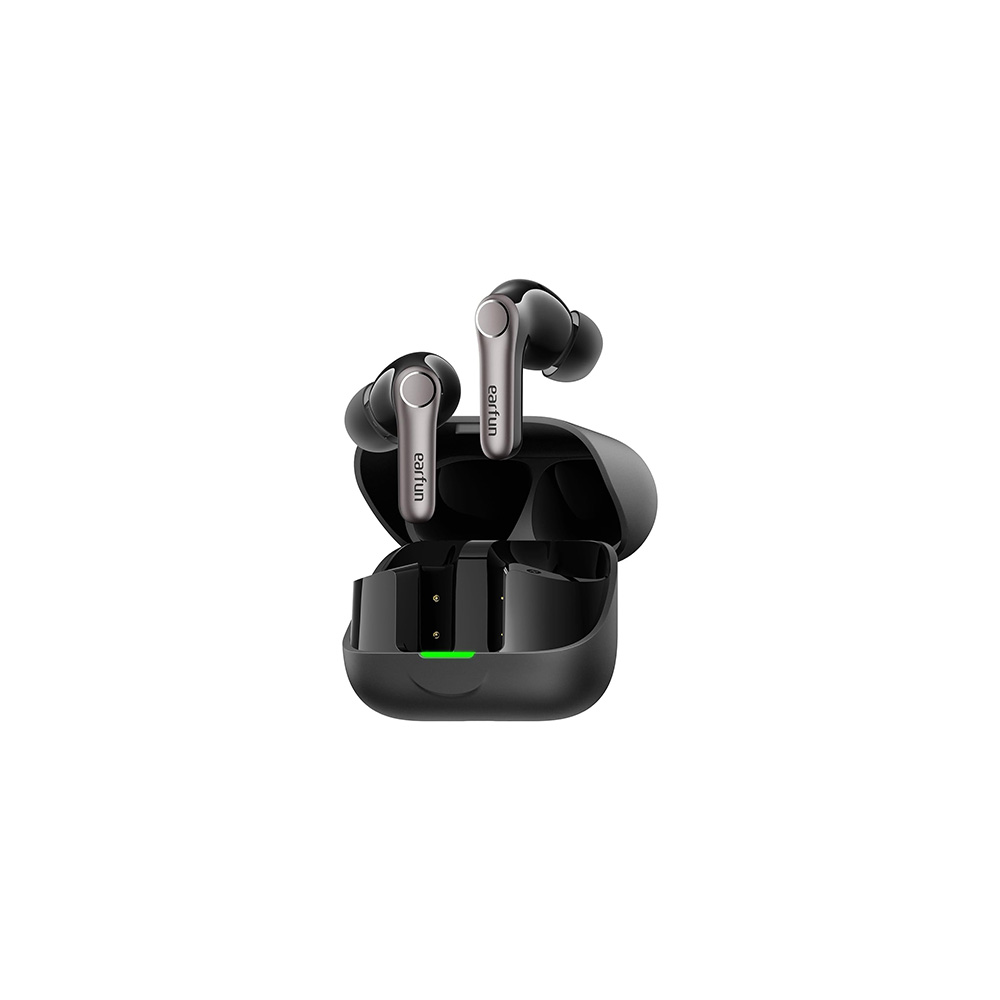
The EarFun Air Pro 4+ are a perfect example of affordable earbuds with superior sound quality for a fraction of the price of more expensive flagship rivals. Equipped with a dual-driver system comprising a 10mm dynamic driver and an ultra-compact BA driver, the earbuds enjoy improved treble clarity. This helps reproduce auditory nuances, such as fingers sliding along a guitar fretboard. Vocals and percussion instruments are also equally well-served, and it’s easy to locate each instrument in a 360-degree sphere.
- Read our full EarFun Air Pro 4+ review
Bass and midrange frequencies are well presented, with a modest boost below 100Hz. The only notable deviations are in the treble, with a slight boost at 7kHz, followed by a dip at 10kHz, and then another peak and trough above that. While this can cause some high-frequency elements to sound uneven, the added treble brings out brilliance in most modern tracks. Unlike the Sony WF-1000XM6, the EarFun Air Pro 4+’s sound quality does not change when ANC is enabled or disabled.
Aside from their default frequency response, the EarFun Air Pro 4+ support Bluetooth 6.0 and the SBC, AAC, LDAC, and aptX Lossless codecs. The last offers up to 1.2Mbps, 24-bit/ 96kHz audio sampling under ideal conditions. Of course, it’s worth taking this claim with a pinch of salt, as many smartphones may not support this audio transfer. Still, downloading the EarFun Audio companion app provides a 10-band custom EQ and a fistful of EQ presets. There’s also a My Sound Profile feature, which walks you through a listening test to tailor an ideal EQ profile for you.
EarFun Air Pro 4+ price history
ANC 8.0 /10Per charge 8.7 h
From owners1 owner review · 1 of 1 would buy again
Best-sounding IEMs: Kiwi Ears Septet

Loading chart ...
Loading chart ...
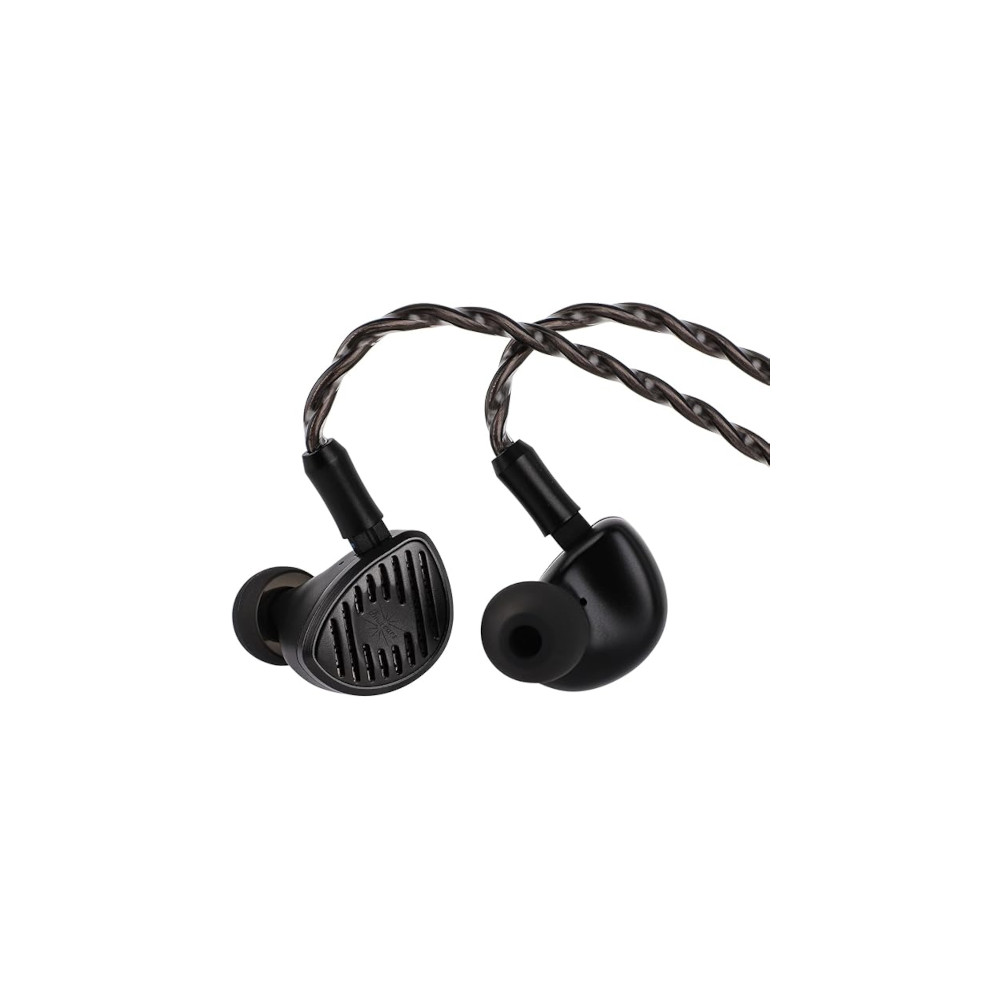
Those seeking a pair of high-quality IEMs should enjoy the Kiwi Ears Septet. These feature seven internal drivers: a single dynamic driver, four balanced armatures, a planar magnetic driver, and a piezoelectric (PZT) driver. The last is uncommon among IEMs and is usually reserved for speakers to cover the high-frequency range. That description goes some way to explaining why the Kiwi Ears Septet may best serve those who enjoy a treble bump.
- Read our full Kiwi Ears Septet review
The earbuds emphasize from 4kHz to 8kHz, which may make some sibilants sound grating to those sensitive to higher frequencies. However, it can also be a boon for those who prefer greater auditory detail, cymbal crashes, and chimes. In particular, the Kiwi Ears Septet perform well for action games. Vocals remain audible during busy sequences, and background tracks shouldn’t pull too much attention. There’s a slight boost in the sub-bass up to 55Hz, providing kick drums and bass guitars with extra “oomph”. However, the midrange is consistent and tracks our target curve closely.
Our MDAQS results show that most people will enjoy the Kiwi Ears Septet’s default frequency response. They score 4.8 in Timbre, 4.1 in Distortion, 3.8 in Immersiveness, and 4.8 Overall. For reference, the Distortion and Immersiveness scores are above the average for IEMs. Consequently, you’re unlikely to experience any issues listening to busy tracks or locating sound sources while listening to music with the Septet.
Kiwi Ears Septet price history

Sound 4.8 /5
Best-sounding earbuds for athletes: KEF Mu3

Loading chart ...
Loading chart ...
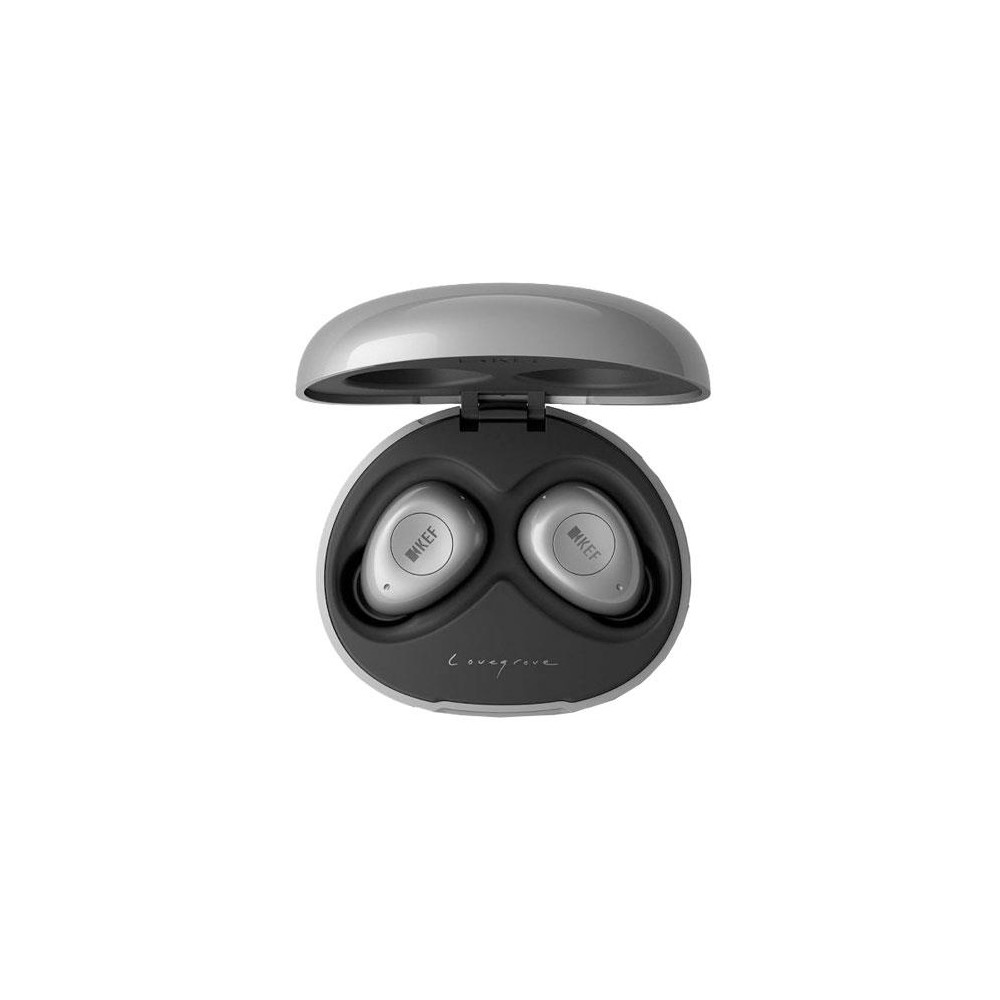
The KEF Mu3 may be old, but they remain one of the best-sounding earbuds on the market for workout enthusiasts. They’re IPX5-rated to guard against water splashes and house 8.2mm dynamic drivers. The earbuds follow our target preference curve, meaning bass, mids, and treble are each present in the right proportions. Kick drums and bass guitars receive a minimal boost without overpowering the mix, and hi-hats are clear-sounding without harsh overemphasis. Snare drum strikes are present in the upper midrange, and it’s easy to locate panned instruments.
- Read our full KEF Mu3 review
Thanks to their even-sounding midrange, the KEF Mu3 are also an excellent option for audiobook fans. Unlike with many other consumer-targeted, overly bass-heavy headphones, voices sound clear and natural. Just note that treble frequencies above 6.6kHz drop off more than we would like. Consequently, higher octaves may sound less present than you’re used to from other headphones, resulting in a darker overall tuning.
The earbuds connect via Bluetooth 5.0 with SBC and AAC. Unfortunately, there are no Hi-Res options, such as LDAC and aptX Lossless. Similarly, the earbuds do not support Multipoint connectivity, and they do not feature automatic in-ear detection. Nevertheless, the buds last nearly 8 hours per charge, which should be more than enough for marathon runners. Their ANC is also handy for attenuating distracting ambient noise, and enabling it does not change the buds’ sound quality.
KEF Mu3 price history
Per charge 9 h
The best-sounding earbuds: Notable mentions

- Bose QuietComfort Earbuds ($154.96 at Amazon): Contrary to modern Bose models, the QC Earbuds enjoy a frequency response with sensible bass and an upper-midrange that follows our target curve. They last over 5 hours per charge, have decent ANC, and support the SBC and AAC codecs. They’re also IPX4-rated for workouts.
- JBL Quantum 50 ($34 at Amazon): Budget-conscious gamers looking for a wired option should consider these buds. While low-end sounds are elevated, the Quantom 50 have a pleasant midrange that’s excellent for vocal reproduction. Their unique tips make it easier to secure a comfortable fit for long listening sessions.
- Linsoul KZ ZSN Pro X ($23.99 at Amazon): The KZ ZSN Pro X are an excellent ultra-budget IEM option with a replaceable two-pin cable and hybrid 10mm dynamic and balanced armature drivers. They follow our target curve reasonably closely with only a small 5dB bump at 5kHz. Most people will like their sound quality.
- Moondrop Chu ($21 at Amazon): Another ultra-budget IEM, the Moondrop Chu features a 3.5mm TRRS jack with decent isolation and a frequency response that favors a free-field type response. In particular, the critical 1-7kHz region is very close to our ideal, but there’s a substantial 10dB drop at about 10kHz.
- Sennheiser Sport Wireless Earbuds ($99 at Amazon): Beach athletes will enjoy these IP54-rated buds. They feature ear tips and wings, and have a frequency response that marginally emphasizes bass over treble. However, it’s easy to adjust the sound from within the Smart Control app or a third-party EQ app.
- Shure SE215 ($99 at Amazon): These mainstay earbuds enjoy excellent passive isolation, feature a removable MMCX cable, and have a frequency response that reproduces most genres well. Treble frequencies roll off earlier than we’d usually like, but the boost at 5kHz will make snares and cymbals stand out.
- Sony WF-1000XM5 ($298 at Amazon): The Sony WF-1000XM5 offer nearly 10 hours of battery life, a comprehensive companion app, outstanding ANC, and a default sound quality most people will enjoy. In particular, the buds score 4.9 Overall in our MDAQS tests, placing them among the very top-sounding buds on the market.
- Sennheiser IE 600 ($599 at Amazon): If you have the money, these IEMs have a 3D-printed AMLOY-ZR01 housing that’s tougher than steel. They support multiple wired connections, and their frequency response only deviates from our house curve significantly at 18kHz (the edge of human hearing). They also enjoy excellent spatial depth.
- Sennheiser MOMENTUM True Wireless 4 ($269.95 at Amazon): The MOMENTUM True Wireless 4 have remained one of my favorite earbuds thanks to their robust IP54 rating, Auracast and LE Audio support, aptX Lossless compatibility, and premium sound quality. They score 4.8 Overall in our MDAQS tests and closely follow our target curve.
- Moondrop Chu II ($18.99 at Amazon): Even cheaper than others on this list, the Moondrop Chu II enjoy an improved fit and feature a removable cable. Bass and midrange frequencies follow our preference closely, and harmonics come through relatively well.
- Skullcandy Dime 3 ($29.99 at Amazon): Unlike most Skullcandy earbuds, the Dime 3 have a neutral sound that most people will enjoy. While there’s no companion app to EQ the sound, the buds last nearly 7 hours per charge cycle and are IPX4-rated.
- Moondrop Space Travel ($24.99 at Amazon): The Moondrop Space Travel are worth every penny thanks to their premium fit, decent ANC, and superior default frequency response. They align with our target curve in the bass and midrange, and score 4.9 Overall in our MDAQS tests. Unfortunately, they only support SBC and AAC, and Multipoint is missing.
- Skullcandy EcoBuds ($39.99 at Amazon): Eco-friendly shoppers should consider the Skullcandy EcoBuds. They’re IPX4-rated, support rapid charging, and claim a carbon footprint that’s half of comparable products. They score 4.4 Overall in our MDAQS tests and only deviate from our target curve substantially around 7kHz.
- Milwaukee REDLITHIUM Jobsite Earbuds ($239.99 at Amazon): Provided you can get them to fit properly, these earbuds offer excellent passive isolation and have a sound quality that scores 4.8 Overall in our MDAQS tests. There’s no ANC or companion app, but the buds last 11 hours per charge cycle and sound excellent for most genres.
- EarFun Air Pro 4 ($89.99 at Amazon): These buds have earned our recommendation since launch thanks to their IPX5-rated design, comprehensive companion app, and aptX support. However, while their noise cancellation is decent, it does alter the earbuds’ tuning by reducing the bass. Otherwise, these buds score 4.8 Overall in our MDAQS tests.
- Google Pixel Buds Pro 2 ($229 at Amazon): If you need OS-agnostic Live Translation, in addition to a comfortable ergonomic fit, decent ANC, and nearly 8 hours of battery life, then the Pixel Buds Pro 2 may be for you. Their sound quality aligns closely with our target house curve, and there are EQ presets to adjust the sound.
- Moondrop Aria 2 ($89.99 at Amazon): Finally, the Moondrop Aria 2 offer a premium wired listening experience with a replaceable 2-pin cable, pressure vents, and a 4.4mm balanced connection that’s ideal for Digital Audio Players. Their sound quality tracks our preference curve, with a marginal dip in the mids and a boost in the upper-midrange at 2kHz and 5kHz. The latter may add more presence than you’re used to, but it isn’t obscene.
What you should know about the best-sounding earbuds

For starters, I must reiterate that sound quality is subjective and is consequently one of the hottest debates in audio. Ultimately, what sounds good to you may not sound good to me, and vice versa. That’s because what constitutes “good sound” depends heavily on your ear anatomy and personal preferences. For example, some enjoy accentuated bass in their mix, while others prefer more pronounced treble. Our hearing changes as we age, too, which means what sounded good to you before may sound bad to you today, which may sound bad to you tomorrow. It’s absolutely fundamental to remember that, when discussing sound quality, there is no “right” or “wrong”.
However, some general rules may help you to achieve subjectively superior audio. For example, well-fitting buds with a good seal generally retain bass frequencies inside the ear canal better than loose-fitting options. Given that studies have shown that most people enjoy a U-shaped frequency response, this is a pivotal consideration for those seeking good-quality audio. Similarly, well-made driver systems, even single dynamic drivers, can sound better than poorly built dual or multi-driver systems. A suitable listening environment is also essential; if one isn’t available, you may need to consider buds with ANC capabilities. You’ll also want access to high-resolution source material, balanced wired connections, and Hi-Res Bluetooth codecs, such as aptX Lossless and LDAC.
How we test the best-sounding earbuds

While sound quality is subjective, it is possible to ascertain a median preference among the general population. This is what Dr. Sean Olive and his team achieved with the famous HARMAN headphone listener preference curves. These have since been mentioned in 14 published papers, making them the best and most scientifically defensible attempt to explain what headphones should sound like.
For SoundGuys’ headphone testing, we use a Bruel & Kjaer 5128 head simulator connected to a B&K 1704C-102 to power the ear simulators and a high-quality audio interface to digitize the signal. This head simulator represents the average listener using data we’ve gathered from a cross-section of in-ear, over-ear, open-back, and closed-back headphones with various driver types. We loaded the measurement data into a spreadsheet and crunched them down to produce our calculated preference curve. The compendium of reference products used includes recent AKG, Apple, Audeze, Bose, Google, Jabra, KEF, Monoprice, Shure, and Sony headphones.
Why you should trust SoundGuys

Over the years, we’ve both listened to and measured over 1,500 headphones and other products, amassing tons of test data. We rigorously put earbuds and headphones through their paces and conduct hands-on tests among our experienced team to compare results. We have a strong ethics policy here at SoundGuys, and we can only pay our rent if our readers remain happy with their purchases.
But don’t just take our word for it. Since debuting our SoundGuys Headphone Preference Curve, it has been included in multiple listening studies. This includes validating over-ear headphones in a 2023 study led by Senselab, an in-ears Harman research pilot study conducted by Dr. Sean Olive in early 2024, and validation alongside the Harman IE 2019 Target specific to the B&K 5128 for use with in-ears in a published AES study on October 8, 2024. Additionally, in partnership with RTINGS, the SoundGuys Headphone Preference Curve and SoundGuys Studio Curve were added to the Montreal-based site’s charting and EQ tools. The curve was discussed at length in the fourth edition of Floyd Toole’s Sound Reproduction: The Acoustics and Psychoacoustics of Loudspeakers, Rooms and Headphones in sections written by Sean Olive.
Frequently asked questions
Based on our testing data, the Sony WF-1000XM6 have subjectively superior sound quality. This is thanks to their upgraded driver system, which delivers a more moderate bass response and a pleasing midrange. Instrument separation is very good, although the earbuds sound best with ANC disabled.
No, this is a common misconception. What actually matters regarding sound quality is ear anatomy, personal tastes, driver quality, fit, source file quality, connection, and listening environment.
The Sony WF-1000XM6 are widely considered to have some of the best noise cancellation and sound quality on the market. However, the Apple AirPods Pro 2 are also excellent for iPhone owners. So too are the AirPods Pro 3, provided you can secure a good fit.
The Apple AirPods Pro 2 and AirPods Pro 3 are among the best earbuds for those suffering mild to moderate hearing loss. They are FDA-approved, meaning they have received certification to function as over-the-counter (OTC) hearing aids for adults.
Thank you for being part of our community. Read our Comment Policy before posting.