All products featured are independently chosen by us. However, SoundGuys may receive a commission on orders placed through its retail links. See our ethics statement.
Best headphones with mic for conference calls
March 24, 2026


Let’s face it: conference calls are rarely smooth. In the best-case scenario, you only say “what” a few times, and in the worst-case scenario, you spend an hour of your day parodying an old Verizon commercial. Seeing how the ability to work from home has become more relevant even post-pandemic, the right equipment for telecommuting is essential. We’ve put together a list of the best headphones for conference calls to make remote work a little less frustrating.
What's new?
- This article was updated on March 24, 2026, to change picks, retire old ones.
- This article was updated on June 4, 2025, to change the format, update picks for 2025.
- This article was updated on May 15, 2024, to refresh our top picks and notable mentions.
- Whether you work from home or at the office, check out our list of the best gaming headsets with good microphones for more options and the best headphones for work to suit every need besides just conference calls.
The Quick Answer
For a quick guide to the best headphones for conference calls that suit your needs and budget, check out our top picks below. Each has a link to our full review.
The best overall:
The best for iPhone:
The best wired pick:
The best mid-range earbud pick:
The best gaming pick:
Why the Sony WH-1000XM6 are the best headphones for conference calls


- Excellent ANC
- Good sound quality
- Excellent microphone
- Device compatibility
- No USB listening
- No ingress protection rating
- Price

Sony’s flagship noise canceling headphones receive plenty of praise, all of which is well deserved. The Sony WH-1000XM6 is one of the best all-around headphones you can buy, and has a great microphone system for hands-free calls. On top of that, the noise canceling of the Sony WH-1000XM6 is among the best of the best, so you can tune out your coworkers even when you’re not on a call.
The new AI noise rejection system is excellent at killing off office noise and other irritants. This is about as good as embedded mic systems get, and if you want something better, you’ll need to attach an external boom mic.
Read our full Sony WH-1000XM6 review.
Best iPhone pick: Apple AirPods Pro 3

Though it may seem a little obvious, the Apple AirPods Pro 3 are likely the best audio products for conference calls when using an iPhone. Not only do they work very well for music and other common tasks, but the ANC and microphone quality is quite good.
These may not be the best fit for users who need to be on calls all day, however, as the battery life for the ubiquitous earbuds is not long enough to last an entire workday. That said, for those who only periodically have to jump on a call, these earbuds remain the best for iPhone users.
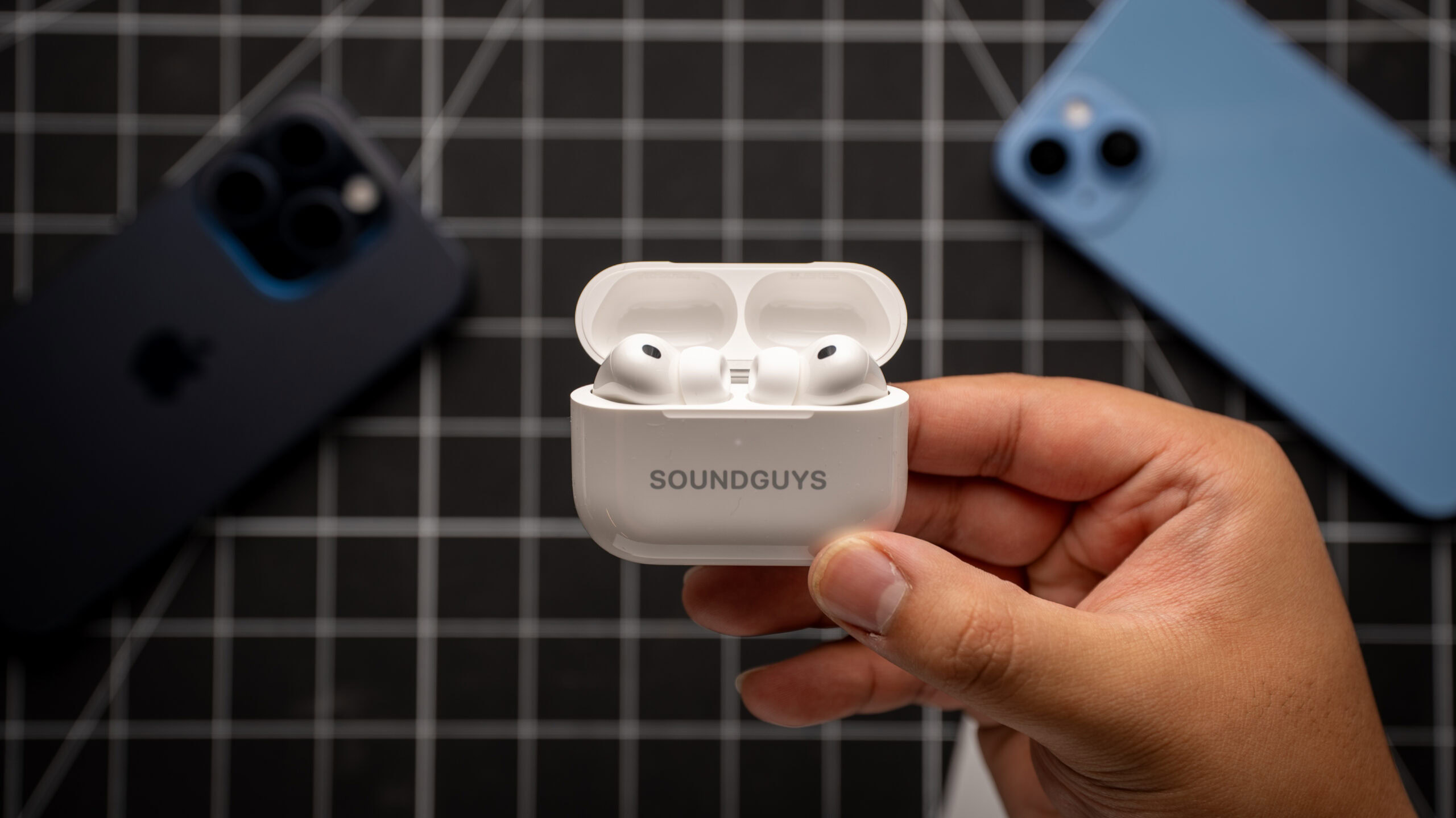

Read our full Apple AirPods Pro 3 review.
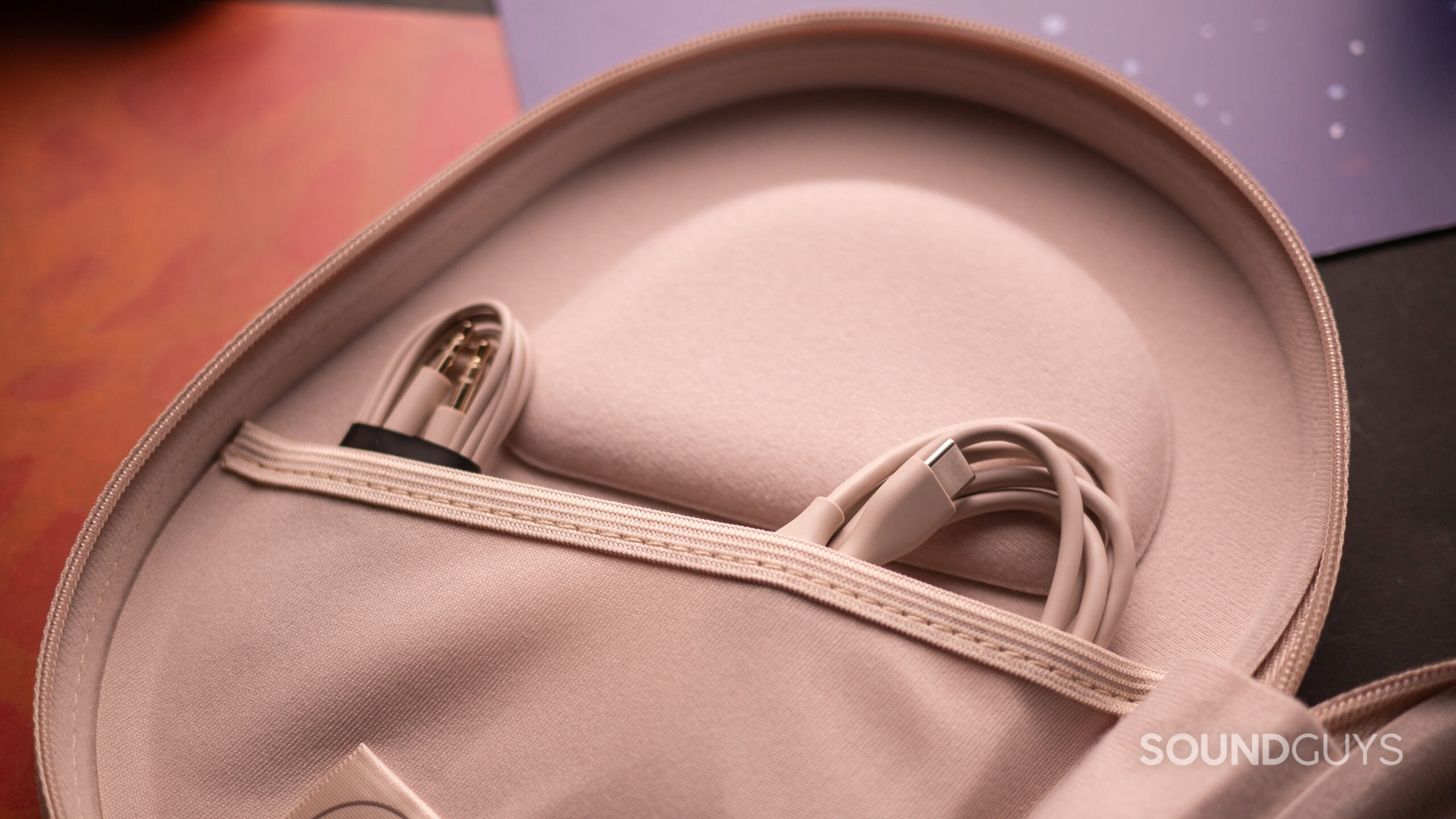
The Bose QuietComfort Ultra Headphones (2nd Gen) are future-proof

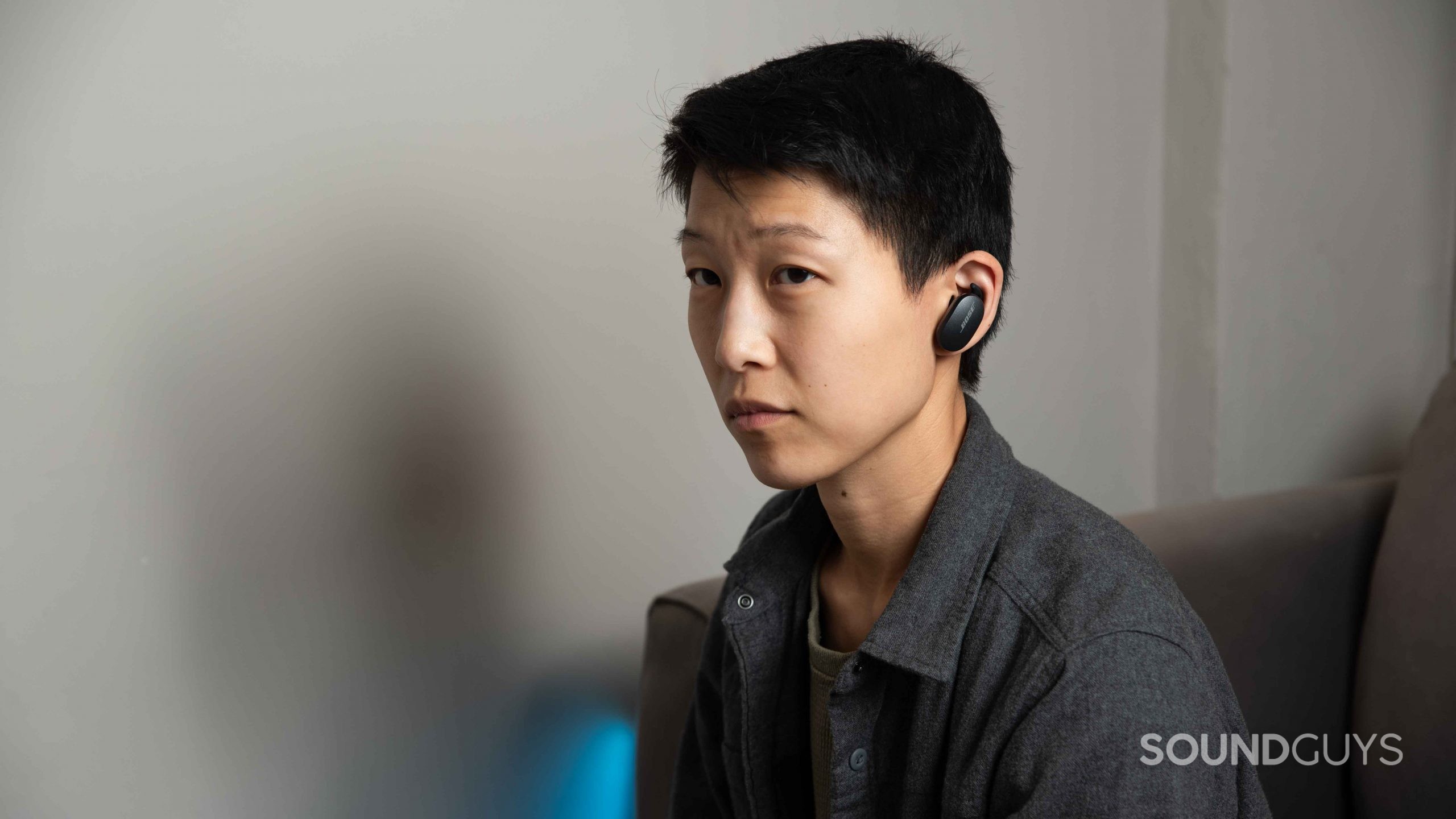
The Bose QuietComfort Ultra Headphones (2nd Gen.) impress with high-performing active noise canceling (ANC) capability, ensuring that background noises like traffic or office chatter are significantly reduced. This feature, coupled with the headphones’ excellent noise isolation, creates an ideal auditory environment for both the wearer and the listener on the other end of the call.
For call quality, the Bose QuietComfort Ultra Headphones (2nd Gen.) are equipped with a capable microphone array, ensuring clear voice transmission. Additionally, the headphones offer convenient controls for managing calls and playback, ensuring that users can easily mute, play, or pause without distraction. The incorporation of Snapdragon Sound and aptX Lossless, alongside Bluetooth 5.4, further enhances connectivity and audio quality, ensuring that every word is heard with precision and without lag.
Read our full Bose QuietComfort Ultra Headphones (2nd Gen.) review.
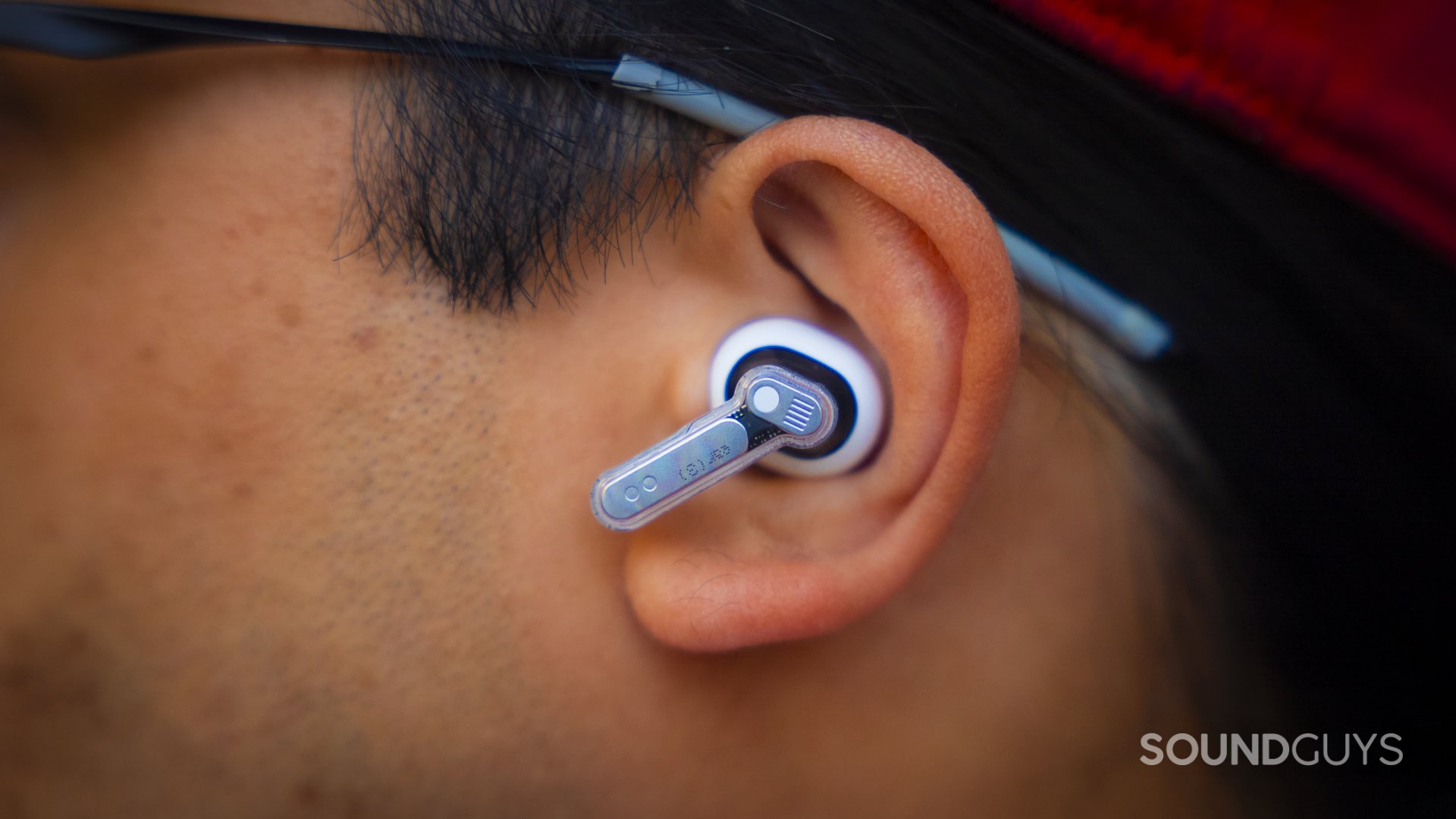
The Nothing Ear (3) is a more affordable true wireless option

Of course, not everyone wants to spend a truckload of money on wireless earbuds. For that crowd, the Nothing Ear (3) isn’t a bad option to look for. At around $150 on most e-commerce sites, this model represents the most affordable option on this list. Though it won’t last as long as some of the over-ear headphones out there, these earbuds reject noise quite handily in ways that others don’t.
The Ear (3) are definitely a contender for some of the best affordable noise canceling earbuds based on performance and value, especially when you’re talking about using them for work. Nothing uses its mic array in conjunction with a voice pickup unit — a bone conduction device — to filter out noise. The charging case also doubles as a higher-quality microphone if you’re in a pinch.
Read our full Nothing Ear (3) review.
The Corsair VIRTUOSO PRO is a solid open-back headset with a detachable microphone
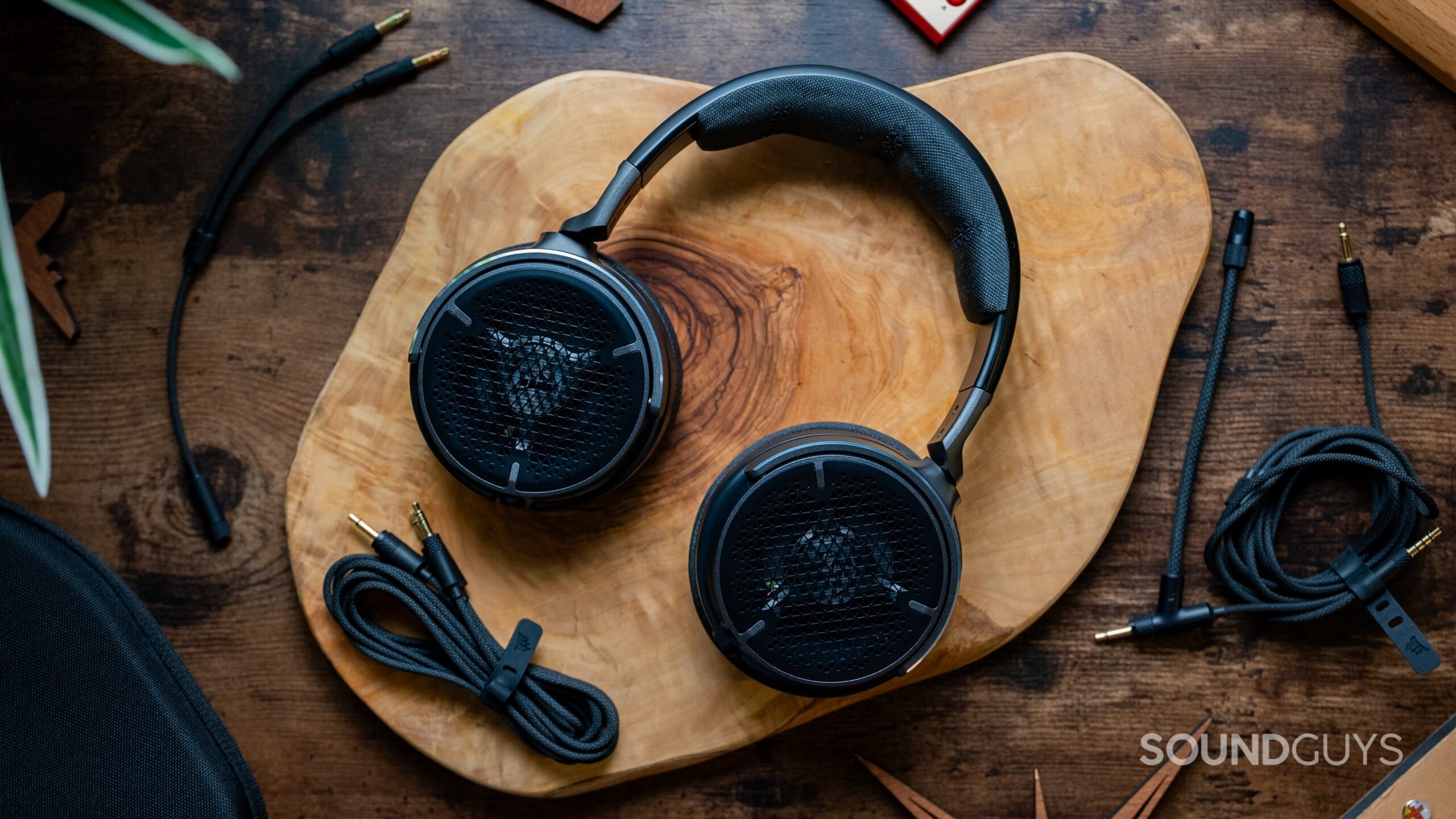

The Corsair VIRTUOSO PRO is a solid open-back headset choice for those wanting excellent microphone quality. Its open-back design allows sound to pass through freely, creating a more natural and spacious soundstage that excels for gaming, music, and movies in quiet environments.
Despite being targeted at gamers, the VIRTUOSO PRO works incredibly well for remote workers and those who take a lot of video calls from home. It features a detachable microphone that provides clear voice transmission, making it viable for professional use in virtual meetings and conferences. In our review, we were impressed by the mic’s ability to capture voices naturally while filtering out ambient noise.
Read our full Corsair VITUOSO PRO review.
The Razer BlackShark V2 Pro is an excellent choice for gaming, too
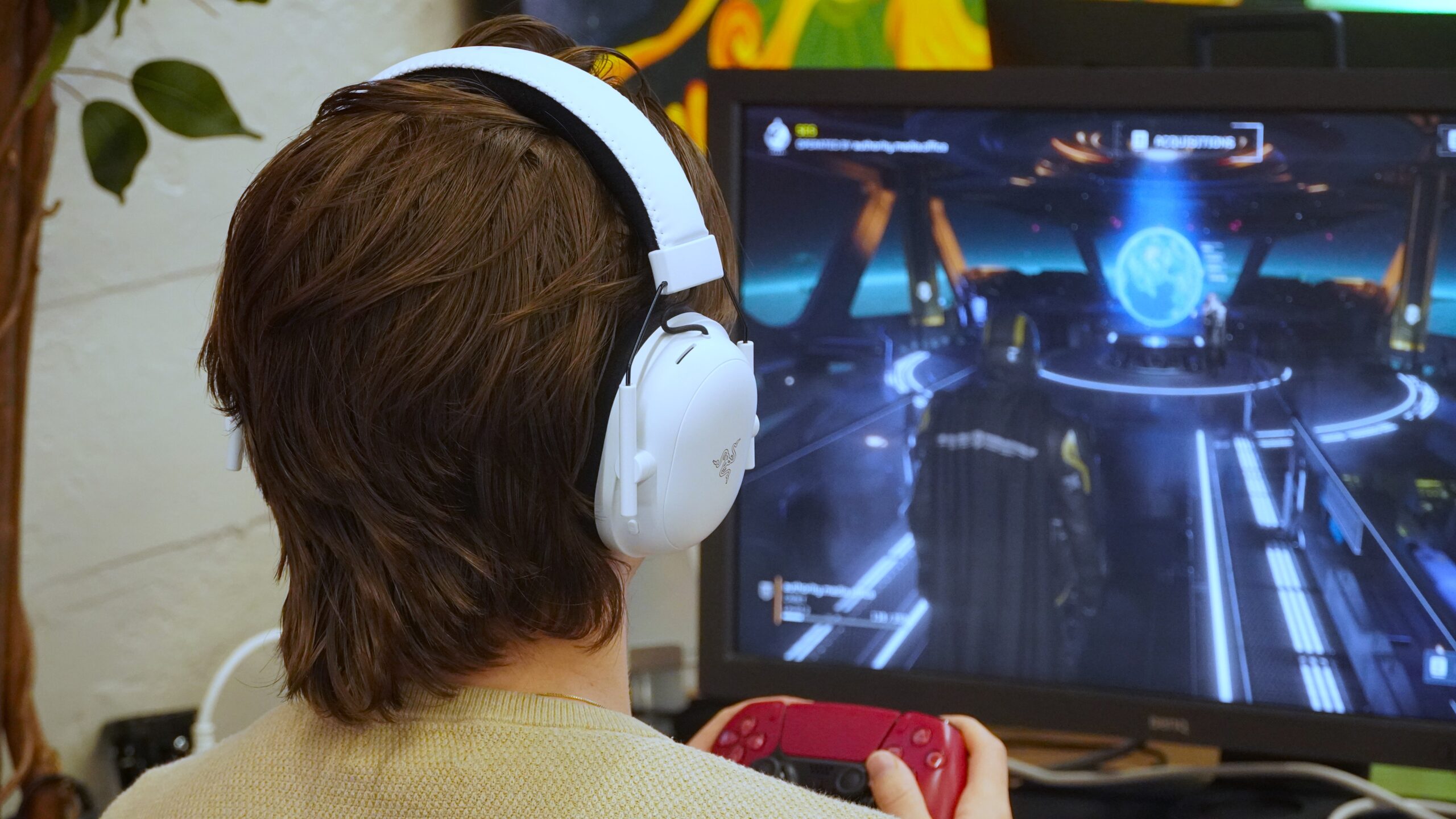

The Razer BlackShark V2 Pro (2023) is an excellent wireless gaming headset that is also well-suited for remote workers and those who take a lot of calls from home. It delivers outstanding microphone quality, with review tests showing that the detachable boom mic captures clear, natural voice audio even in noisier environments. The mic is able to reject a good amount of background noise, like keyboard clacking and outside traffic sounds.
While designed as a gaming headset, BlackShark’s strengths in mic quality, wireless freedom, long battery life, and all-day comfort make it an outstanding option for anyone looking for a wireless headset solution for video calls and working remotely from home or office. At $199, it provides excellent value for those seeking a multipurpose wireless headset.
Read our full Razer BlackShark V2 Pro (2023) review.
The best Bluetooth headphones for conference calls: Notable mentions
- Anker Soundcore Space Q45 ($149 at Amazon): With support for LDAC (or AAC and SBC), Bluetooth 5.3, decent ANC, and 55 hours and 48 minutes of battery, you’d be surprised how good the mics sound in less-than-perfect conditions.
- Apple AirPods Max ($499 at Amazon): Is your job subsidizing your headset? If yes, take the opportunity to pick up the AirPods Max, assuming you have an iPhone and other Apple devices to use with it. This has great microphone quality on the right device.
- Audio-Technica ATH-M50XBT2 ($198 at Amazon): If you’re looking for no-nonsense Bluetooth headphones that sound great, last forever, and give you the option of wired listening, get these. Microphone quality isn’t perfect, but you won’t find much to complain about, especially relative to cheaper headsets like the Anker Soundcore Vortex.
- Logitech G435 Lightspeed ($29 at Amazon): This gaming headset makes for a great pair of work headphones thanks to its Bluetooth connectivity and low latency USB-A RF adapter. For much less than $100, you get a solid microphone and comfortable headset with 24-hour battery life.
- Jabra Elite 45h ($99 at Amazon): For some of the best battery life on a wireless headset and useful tactile buttons, get the Jabra Elite 45h. So long as active noise cancelation is not a concern (because there is none).
- Jabra Elite 85h ($190.99 at Best Buy): Try this if you like everything about the Elite 45h but you really just want ANC and a more comfortable fit.
- Shokz OpenComm ($159 at Amazon): This bone-conduction headset looks a lot like the popular AfterShokz Aeropex, but it also has an external boom mic for better mic quality. If you already like all the perks of bone-conduction headphones and want to bring them to the office, get the OpenComm.
- Sony ULT WEAR ($199.99 at Amazon): A more affordable set of ANC headphones, the Sony ULT WEAR offers good microphone quality like its bigger brothers.
If you want a more portable headset, check these options out

- Beats Fit Pro ($159 at Amazon): For use with iPhone and Android alike, the Fit Pro fits securely, boasts a six-hour battery life per charge, ANC, and the mic isn’t bad either. Bonus H1 chip integration for your iPhone is handy too.
- Google Pixel Buds 2a ($129 at Amazon): These affordable buds have decent battery life, but middling mic quality.
- Samsung Galaxy Buds 4 Pro ($249.99 at Amazon): Possibly one of the comfiest earbuds on the list, Samsung’s earbuds sound good, solid ANC, and the mics handle sub-optimal conditions well.
Hold up! Something’s different:
Some of our picks’ frequency response and isolation charts were measured with our old testing system. We have since purchased a Bruel & Kjaer 5128 test fixture (and the appropriate support equipment) to update our testing and data collection. It will take a while to update our backlog of old test results, but we will update this article (and many others!) once we’re able with improved sound quality measurements and isolation performance plots. These will be made obvious with our new chart aesthetic (black background instead of white).
Thank you for bearing with us, and we hope to see you again once we’ve sorted everything out.
What you should know about Bluetooth headphones for conference calls
No matter what headphones you decide to use for conference calls, the odds are pretty high that your conference call will still sound bad, even if you sound good.
There are plenty of reasons for this poor audio quality and transmission, one of them being a consequence of limited bandwidth: dynamic range compression. This processing reduces loud sounds’ volume levels while increasing quieter ones, effectively stripping the unnecessary frequencies from your voice. This is great for efficiency purposes but can make people, especially those with cheap headsets, sound bad. To get a better idea of issues surrounding telecommuting and how you can improve call quality.
A proper fit will optimize audio quality
To get the best sound quality during your call, you need to find a proper fit. When external noise permeates your headphones’ barrier, it’s tough to hear certain sounds over that din. This can result in poor speech intelligibility.
When using over-ear headphones, finding a proper fit requires that your ears fit within the ear cups. This positioning will lessen any chance of background noise masking your audio. Bespectacled workers may need to invest in third-party ear pads. SoundGuys recommends velour material as it’s forgiving and still wraps nicely around eyewear arms.
What makes a good headset microphone?

The best wireless headset microphone is one that is separate from the headset itself, so gaming headsets are a safe pick. The main benefit of having an external microphone is that it more effectively mitigates the proximity effect. This way, your voice won’t be unevenly amplified in the lows.
There are a few things we prioritized when picking out headphones for conference calls. Although background attenuation is important, and all picks perform above average in this regard, it’s second to raw microphone quality. Yes, reducing external noise by way of an advanced system is great, but if the actual microphone still isn’t up to snuff, it doesn’t matter how well tertiary mics cancel ambient noise.
Keep your expectations realistic: headsets rarely have a passable microphone, making every listed pair of headphones for conference calls an exception to the rule. Even though there are some great options highlighted, the fact remains that microphone quality won’t compare to a dedicated XLR or even a USB mic.
These picks are headphones first, conference call tools second
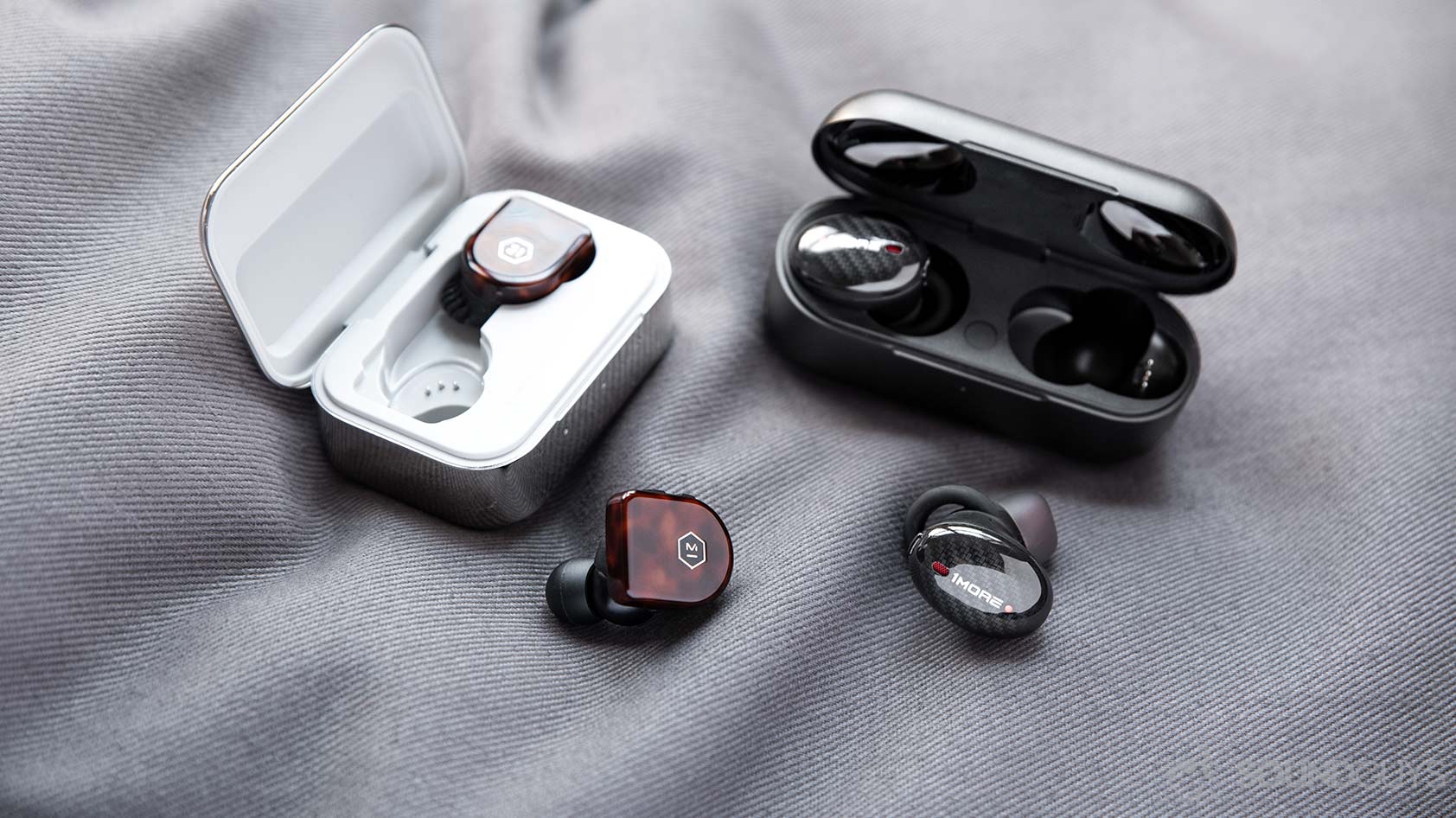
Most of us are looking for a versatile pair of headphones for conference calls, something that does it all well. That’s why most of our top picks are consumer headphones with top-notch mic systems built-in. If you’re looking for more professional, office-oriented headsets, we have some great options in the notable mentions section.
You may not expect a gaming headset to be a great option for conference calls, but the fact that most models include external microphones makes them ideal candidates for calls. The downside is sometimes, the microphones aren’t removable, or the headsets have a specific aesthetic that won’t please most users. However, if you just want good microphone quality in your headphones, a cheap gaming headset will be a good bang for your buck.
Headphones can cause tinnitus, but if you’re using them properly and listening at safe volumes, it shouldn’t be an issue.
Plenty of people experience what the American Speech-Language-Hearing Association (ASHA) classifies as a normal degree of hearing loss. This happens with exposure to loud sounds over time and age. There are also more specific variants of hearing loss (e.g. sensorineural and conductive hearing loss) that are preventable. With regards to headsets, the easiest way to prevent auditory damage is by keeping volume levels below a dangerous output. It’s unlikely that you’ll crank up the volume to dangerous levels during a conference call, but you may be tempted to do so when listening to music. We encourage you to avoid this and either invest in one of the noise canceling options or go to great lengths to find a proper fit.
How we test headphones for conference calls
Though we assess all headphones with the same exhaustive battery of tests, there are some results that matter more than others. We test headphones objectively because it allows our readers to make informed, relevant decisions based on hard data.
- We test sound quality with our Bruel & Kjaer 5128 test head, and compare the frequency responses we measure against our industry-validated Headphone Preference Curve.
- We project likely user preference by partnering with HEAD acoustics to derive Multi-Dimensional Audio Quality Scores to rate Mean Opinion Scores from the data of hundreds of real people from 1-5.
- We test isolation and ANC in a standardized environment, with a 90dB(SPL) stimulus of shaped pink noise. We collect samples with the ANC on, the ANC off, and the headphones off the head so we can plot and compare the data.
- We test the microphone with a series of standardized recordings, with a calibrated mouth simulator. We re-run the sequence for a number of commonly-met noisy situations, and allow readers to listen for themselves.
After testing hundreds upon hundreds of products in this fashion, we’re able to compare the data and samples to sift the chaff from the wheat. We then take the best of the best and add them to our best lists as new products earn a spot in their respective categories.
Why you should trust SoundGuys
We strive to educate our readers on the perpetually evolving world of consumer audio. When approaching any audio product, we acknowledge that assessing it requires a combination of objective testing and subjective reflection: not everyone wants a studio sound, and that’s just fine. At the end of the day, we want you to be happy with your purchase if one is made. Although SoundGuys does use referral links, none of our writers benefit from awarding one product over another.
Frequently asked questions about the best Bluetooth headphones for conference calls
The Sennheiser PXC 550-II has a microphone that does a good job of rejecting external noise. If you want something more compact, consider the Bose Sport Earbuds.
It depends on what you’re doing while teaching. If you’re going to be sitting at the computer the whole time, you may want to opt for a standalone mic for better audio quality. Still, you’ll probably also want to be wearing headphones so that, when your students speak, it doesn’t echo through your microphone.
If you’re going to be standing and drawing on a whiteboard, having a wireless headset might be a more ergonomic solution. The long and short of it is this: a standalone mic will almost always have better quality than a headset, but a headset is usually more convenient.
For one thing, having a headset improves ergonomics because it frees up your hands and allows you a larger range of movement. Call quality is also better with a headset because you can hear through both ears rather than one, and speakerphone is typically low quality too. Additionally, if your headset has a dedicated boom microphone, your colleagues will be able to hear you crystal clear.
Whether a pair of headphones fit you well depends on your particular ear shape, if you wear glasses or have ear piercings, and, of course, the build of the headphones themselves. If you are wearing headphones for many hours at a time, you’ll probably want to go with over-ear headphones because they don’t squish your ear in any way. Of this list, we recommend the Shure AONIC 50 because of its thick memory foam ear cups and headband adjustability for any head size.
To answer your question, the Google Pixel Buds A-Series are pretty good true wireless headphones. However, because you’re using a MacBook, there are certain features you may miss: for example, Siri won’t work, and you won’t have Google Assistant either. For a true wireless earbud, the microphone is surprisingly decent. There’s no noise cancelation, which may or may not be important for your environment.
With that said, for the price, there are other options that might suit you better and lend some Apple functionality, like the Jabra Elite 7 Pro, which has a great microphone for a wireless earbud. You get Apple compatibility via app support.
Dive into those Zoom calls with the Jabra Elite 45h. Specially designed for those sporadic Zoom encounters, they not only pack a battery punch but also come with some seriously user-friendly tactile buttons. Fancy hearing your own voice during those long calls? The Elite 45h’s got your back with its sidetone effect.
If noise canceling is the game, Sony WH-1000XM5 is the name you ought to remember. These headphones don’t just play; they dominate. Boasting an ANC unit that’s in a league of its own, they tackle external nuisances with unparalleled finesse.
Noise canceling headphones are they’re fantastic at immersing the wearer in a cocoon of silence, blocking out the chaotic hum of the world around. But, when you’re chatting on a call, your listener might is not as lucky. Noise cancelation works wonders for the headphone user, but for the person on the other end? Not so much. They will still catch wind of background noises. So, while you’re shielded from the ambient sounds, your conference call buddies might still get an earful of that lively cafe background.
Thank you for being part of our community. Read our Comment Policy before posting.